

Best Places to Visit in Amritsar
About Amritsar
Amritsar’s top destinations include the spiritual Golden Temple, historical sites like Jallianwala Bagh and Gobindgarh Fort, and cultural experiences at the Partition Museum and Sadda Pind, plus the patriotic Wagah Border ceremony, offering a mix of religious serenity, history, and Punjabi culture. Don’t miss the ornate Durgiana Temple, exploring bustling bazaars like Hall Bazaar, and tasting famous street food like Amritsari Kulcha and lassi.
1. Golden Temple
Key highlights: Guru Granth Sahib, Guru-ka-Langar
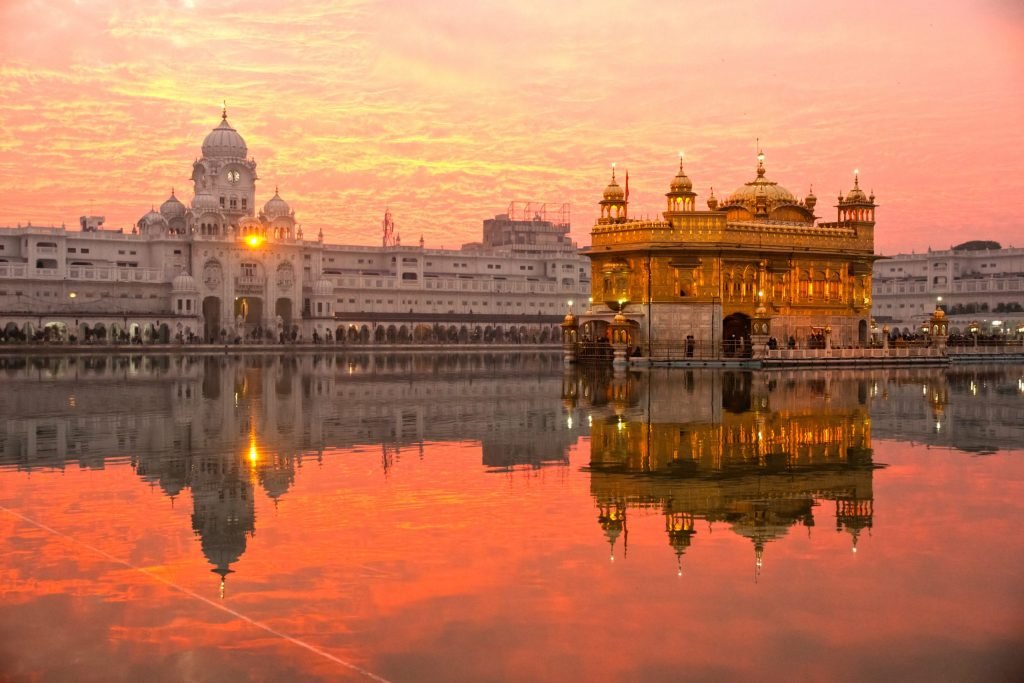
One of India’s most spiritual places, the Golden Temple, also known as Sri Harmandir Sahib, is the holiest pilgrimage site of Sikhism. Located in the heart of Amritsar, the temple’s magnificent golden architecture and daily langar (community kitchen) attract a large number of tourists and devotees every day. The temple is open to devotees of all faiths and serves free meals to over 100,000 people from all walks of life.
2. Jallianwala Bagh
Key features: Jallianwala Bagh Wall and Well
Jallianwala Bagh, a historical site in Amritsar, commemorates the massacre of April 13, 1919, where British troops killed thousands of unarmed civilians during a peaceful protest. The site features bullet marks on the walls, the Martyrs’ Well, and a memorial erected in 1951. It serves as a powerful reminder of India’s struggle for independence and attracts tourists with its gardens, exhibitions, and the eternal flame of remembrance.
3. Partition Museum
Key features: Gallery displays, Peace Gallery, artifacts and memorabilia, interactive exhibits
The Partition Museum in Amritsar is a museum that houses a collection of stories, memoirs, art, and artifacts that preserve the memories of the time before, during, and after the partition of British India. Located in the Town Hall of Amritsar and developed by The Arts and Cultural Heritage Trust (TAACHT), this museum is part of the newly launched Heritage Street in Amritsar, which starts from the Golden Temple and ends at the Town Hall.
4. Wagah Border
Key Highlights: Wagah Border Ceremony
Located 28 km from Amritsar, the Wagah Border marks the border between India and Pakistan along the Grand Trunk Road. The Wagah Border Ceremony, or Beating Retreat Ceremony, which takes place every day before sunset, is the main attraction here. This ceremony involves closing the international gate and lowering the flags of both countries.
5. Durgiana Temple
Key Highlights: Languranwala Fair at Durgiana Temple
Durgiana Temple, also known as Lakshmi Narayan Temple, is a Hindu temple located in Amritsar city, approximately 1.6 km from the Golden Temple. It resembles the famous Golden Temple and offers a similar experience of peace, tranquility, and spirituality. Inside this historic temple is a beautiful pond where idols of Goddess Lakshmi and Lord Vishnu can be seen floating.
6. Gobindgarh Fort
Key attractions: Sher-e-Punjab, Toshakhana, The Bungalow, Spirit of Punjab, Kanda Boldiyan Ne, Amritsari Zayka, Haat Bazaar
Gobindgarh Fort, built in the 18th century and later fortified by Maharaja Ranjit Singh, is a 43-acre cultural hub in Amritsar. It features attractions such as museums, a light and sound show, Punjabi performances, and the Toshakhana, which houses rare artifacts and a 7D show. The fort offers visitors a blend of history, culture, and entertainment.
7. Shri Ram Tirth Temple
The Shri Ram Tirth Temple, located near Amritsar city, was built to honour the birthplace of Luva – Kusha, twins of Rama and Sita
The Shri Ram Tirath Temple, located near Amritsar city, was built to honor the birthplace of Lava and Kusha, the twin sons of Rama and Sita. Constructed of yellow limestone, this temple dates back to the Ramayana era, where Sita was sheltered in Valmiki’s ashram after being abandoned by Rama. It is believed that the battle between Rama’s Ashwamedha army and Lava and Kusha took place here. The gurukul (school) of the twin princes, located within the temple complex, is considered an architectural marvel by pilgrims.
This ancient temple hosts a five-day fair fifteen days after Diwali, attracting approximately one lakh pilgrims who come to seek blessings. Devotees bathe in the ancient pond near the temple on the full moon night. A tradition called Tula Toran is observed, where lamps made of kneaded dough and ghee are floated in the water on the full moon night. It is believed that following this tradition washes away all sins and pleases Lord Rama. A unique belief is that the pilgrimage is not complete without giving alms or food to the needy. Small amusement park rides, such as merry-go-rounds and giant wheels, are set up near the temple, along with acrobatic performances and magic shows during the five-day event.
8. Street Food
Amritsar is renowned for its delicious street food
Amritsar is renowned for its delicious street food, offering a delightful experience for food lovers. The city’s famous dishes include the world-famous Amritsari kulcha, mouthwatering tandoori chicken, and the irresistible aroma of jalebis and lassi, providing a unique culinary experience for both locals and visitors.
9. The Punjab State War Heroes Memorial and Museum
Punjab State War Heroes Memorial and Museum showcases the fabulous Bravehearts of Punjab
The Punjab State War Heroes Memorial and Museum showcases the glorious heroes of Punjab. This museum immortalizes the bravery of Punjabi soldiers, a spirit of patriotism that permeates the entire complex. Built in a blend of traditional and modern architectural styles, it features a state-of-the-art gallery where Punjab’s rich military traditions and campaigns are displayed.
10. The Maharaja Ranjit Singh Museum
Key features: Armory section, replica of the Kohinoor diamond, statue of Ranjit Singh
The Maharaja Ranjit Singh Museum is a museum located in Company Bagh, Amritsar. It was the summer palace of Maharaja Ranjit Singh, the first king of the Sikh Empire, after whom the museum is named. The museum now showcases the history, art, and architecture of the Sikh community between the 18th and 19th centuries, as well as providing insights into the life of the Maharaja.